
I know that most people come here because of my posts on color but I also believe that most readers are interested in animation and film making in general. So when I come back to films like Dumbo (1941) over and over again, this is not because I only like simple escapist fare. I do like Dumbo, of course, which caused me to look closer at it despite having seen so many more interesting films throughout the years. However, there are several reasons for writing about Disney’s early features here:
First of all, these are the films I believe every reader of this blog has seen at least once (do you read many analyses of films you haven’t seen yet?) and they are available to almost anybody around the world so you don’t have to take my analysis for granted but can reassess it yourself.
There is much more to them than just brilliant character animation. Every storytelling device is used so carefully that it rewards analysis. Furthermore, it’s always interesting to see what a mainstream film as a mirror of mainstream social conventions tells us about a certain period and what makes it still work for today’s audiences.
On the other hand the stories themselves are as basic and simple yet effective that analyzing them can tell us a lot about more complicated or complex movies and essentially about film making in general. It’s important to stop looking at animation isolated from live-action films.
I believe that this blinder perspective is one reason why there still is an “animation ghetto”. The most obvious proof of its existence are overwhelmingly enthusiastic reactions from top critics to every new Pixar production even though most of these movies are only better than other studios’ animated features but hardly as interesting as any live-action film that gets comparable reviews.
Or in other words: excellence within established formulaic conventions is praised so loud that – maybe unintentionally – these conventions are cemented as natural limits to animation. This, among other things, is how a whole medium gets to be widely mistaken for a genre.
I strongly believe that in-depth analysis of just one single film can uncover much more about the nuts and bolts of film making than just superficially comparing many films. Of course, in order to put these discoveries into context, we have to see a lot of movies for comparison. Once you’ve recognized a certain pattern in the film you study, you become aware of it in other films without really looking for it. This certainly enriched my movie viewing experience and still does, every time I stumble upon a new concept.
So, most importantly, writing about a nearly 70 year old film like Dumbo is only interesting in a broader context that tells us something about film making or even human behavior in general.
Last but not least, looking at one film over and over again in different contexts may ultimately help us decide where we want to go with our own works and hopefully may encourage us to shake off the limitations that mainstream feature animation (perceived as a genre) is currently suffering from.
By the way, I do think Ponyo is a remarkable film not because it is old fashioned or even hand drawn, but because it explores its themes from a personal rather than a formulaic point of view. Accordingly, even though I consider Snow White and the Seven Dwarfs (1937) to be one of the best animated features I do not want to see another Snow White unless someone truly makes it his own story again. I’d rather see Mary and Max or any other character-based film that does not revert to animation as an excuse for being predictable and formulaic but as the medium of choice to present a certain story.
Monday, August 23, 2010


Thursday, July 29, 2010
Dumbo's heart

"There is nothing wrong with good schmaltz, nothing wrong with good heart... The critics think I'm kind of corny. Well, I am corny. As long as people respond to it, I'm okay." —Walt Disney
Why we go to the movies
High concept movies are usually sold on the extraordinary like aliens, dinosaurs, incredible battle or action scenes, 3D, an obscure alternate reality or the most unusual love story ever told. In short, seemingly original/unique concepts are the selling point. This way of thinking is matched when you ask mainstream audiences why they choose to pay the admission for a certain film: they say that they want to see something new (unless, of course, they must see a sequel just because they’ve seen the “original”). And they want to be entertained.
But in fact, the novelty factor is not only no indication if a movie is any good, it usually has nothing to do with whether the audience likes a film. That’s the marketing tool, to get as many people in before they know if it is worthwhile.
Then the word-of-mouth sets in which is purely based on audience experience during the film. And this usually depends on emotional involvement with the characters and the story. Obviously we get most easily involved when we see aspects of ourselves in a character, when we identify with a character. It certainly helps if we can look up to character (wishing we were like them) or pity them.
On a side note: People often complain about aliens that look and think like humans rather than wholly original beings, yet the less we emotionally understand about such characters the harder it is to get involved in their interaction and we feel like outside spectators. In fact, movies that treat characters like pawns in a game like Kubrick’s 2001 or The Killers are not embraced by mainstream audiences (unless they have finally become critic-proof classics), no matter how brilliant the concept and execution. Of course, art-house films may have other goals than audience identification, but here I’m looking at the mechanics of films conceived as crowd-pleasers.
Entertainment
So what drives us into the theater in the first place is something different than what keeps us interested in the film once it started. Our conscious expectation of entertainment is based on spectacle and novelty while we unconsciously expect to be moved emotionally by the story. If either one of these expectations is not fulfilled (especially if we're not moved), we are disappointed with the film and do not recommend it even though we may remember a couple of great scenes when someone mentions the title.
Paradoxically, even if we like a film, often, the first thing that comes to mind is not necessarily an emotional plot point but an excessive scene that is not even advancing the story. Be it a song in a musical, Hannibal’s elevator stunt in The Silence of the Lambs or Indiana Jones’ shooting the sword guy. Sometimes these scenes are not even character related like the Pink Elephants in Dumbo.
Once we’ve seen it, we couldn’t imagine the film any other way, but the scene itself doesn’t contribute to the story anything else than mask the unconsciousness that led to Dumbo waking up on a tree. He could just pass out and wake up in the tree. But this excess bit of entertainment is what many people consider their favorite scene. This scene may make the film memorable and unique, it certainly doesn’t make it a great film, though. So spectacle in itself can be entertainment (“cinema of attractions”), but only on the surface without really involving us any deeper.
 The basic story
Even though Dumbo was originally marketed on the premise of spectacle (“a flying elephant”) and a parade of entertaining characters like acts in a circus revue (see poster on the left), neither the novelty factor nor the funny supporting characters are the reason for Dumbo’s enduring success with audiences of all ages. It is still popular because it is emotionally satisfying. As I have said, there is more to it than just good film making, the emotions come from the very basic story, i.e. how these characters interact with each other.
As an experiment, here’s a summary of the basic story without the words “elephant”, “circus”, “ears” or “flying”:
Young Dumbo’s self-confidence is low. All his life he has been ridiculed for his physical deficiencies. The good-natured youngster’s only moments of happiness are with his mother. When he is separated from her because she defended him against a bully, he finds a friend in Timothy, a loner with a heart of gold. While Dumbo is gradually getting himself cast out from society, Timothy tries to raise Dumbo’s self-esteem by arranging a chance for him to redeem himself. But due to Dumbo’s physical handicap he gets cast out from society. After a visit to Dumbo’s mother in jail, he and Timothy accidentally get drunk and wake up in a far off neighborhood. With the help of a group of confident outcasts they discover that due to his physical deficiencies Dumbo possesses extraordinary skills that enable him to redeem himself, rehabilitate his mother and seemingly help the whole community.Although Dumbo himself is directly interacting with all social groups and characters, the bare-bone story comes down to two core-relationships: Dumbo – his mother and Dumbo – Timothy.
In my opinion, they are the true heart of the film.
To be continued…
Friday, July 23, 2010
What is your favorite Dumbo scene?
I’m still working on an analysis of character relationships and their emotional impact in Dumbo. In the meantime I’m curious which Dumbo scene is your personal favorite.
If you like Dumbo, please participate in the poll on the right and/or state in the comments why you like a certain scene or what you like about Dumbo in general.
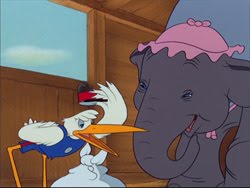
To make a start, my favorite scene is “Menagerie” a.k.a. Dumbo’s bath.
The scenes are numbered according to the animation drafts as posted by Hans Perk of A.Film L.A.
 |
| 1 |
 |
| 3 |
 |
| 3.1 |
 |
| 3.2 |
 |
| 4 |
 |
| 5 |
 |
| 6a |
 |
| 6b |
 |
| 7 |
 |
| 9 |
 |
| 10 |
 |
| 11 |
 |
| 11.3 |
 |
| 12 |
 |
| 14 |
 |
| 14.1 |
 |
| 14.2 |
 |
| 15.1 |
 |
| 16 |
 |
| 17 |
 |
| 18 |
 |
| 19 |
 |
| 19.1 |
 |
| 19.2 |
 |
| 20 |
 |
| 23 |
Wednesday, July 14, 2010
The Secret of Kells in New York and festival previews
Once in a while I get e-mails from animation festival promoters asking me to post previews and entry deadlines on my blog. Rooftop Films, to pick just one example, have many a New York City event I’d want readers to know about. As much as I appreciate being informed of animation events however, most often I’m too slow or do not have time to write other posts than the ones I’m already working on. I apologize for that. In addition, I try to keep the industry and festival news to a minimum as there are better informed sites around the internet.
Every now and then, like right now, posting festival previews just fits into the schedule. So, without further ado:

Every now and then, like right now, posting festival previews just fits into the schedule. So, without further ado:

- New York based Rooftop Films among other things is showing independent movies in outdoor locations. TODAY (July 14th, 2010) they are screening The Secret of Kells (Tomm Moore/Nora Twomey, 2009) in the Socrates Sculpture Park in Long Island City!
Although my expectations were a bit too high, this Irish Cartoon Saloon feature is certainly worth seeing, especially since admission is FREE. Details can be found here.
On Thursday, July 15th, Rooftop has a joint birthday party with other New York City independent cinema organisations indieWIRE and Snag Films.
- The New York Television Festival 2010 will be held Sept 20-25 in New York City. It has been described as the industry’s first recognized festival for independent television. The deadline for the “Independent Pilot Competition” has already passed by, but there seems to be a lot to see at the festival itself. Check it out here.
- In Autumn 2010 (there doesn’t seem to be a precise date yet) the 5th International Fest of Contemporary animation & media-art LINOLEUM will take place in Moscow (Russia).
Submission deadline for animated films is August 30th, 2010. According to the press release ‘the works are accepted without any strict thematic limitation, but under the common title “Full Recovery” ‘. The films (created no earlier than 2009 and not previously shown in Russia) are to be sent in on DVD, not length limits.
For more information, click here (and then click on “ENGLISH” upper left corner).
- The Canadian Quickdraw Animation Society is organizing the GIRAF (Giant Incandescent Resonating Animation Festival): Independent Animation Festival in Calgary, Nov 3-7, 2010.
GIRAF is specialized in independent animation, "with a focus on experimental and self-produced animated film. GIRAF plays an essential role in the promotion, education and appreciation of independent animation from around the world, exposing hungry local audiences to the best animated content from at home and abroad.
Submission deadline for films August 2nd, 2010.

Wednesday, July 7, 2010
Treasure Town revisited


In my last post I was mainly interested in the use of another pair of complementary colors: red and green.
To round this out, here are some more screengrabs, non-chronologically arranged according to visual aspects.
Two-color schemes
Many shots seem to be limited to two colors only. Sometimes this is achieved by having only objects of the same two hues in a shot (below right), sometimes lighting does the job. We're most familiar with color changes caused by lighting at night, or more generally speaking, when sunlight is absent (below left).

So for example to give the impression of a colorful but ultimately brown city, whole sets that are dominated by shades of red and green do the trick:

There are rooms and daytimes where red is clearly dominant:

object colors (skin tones natural)


vs lighting


Red-green props



The whole city seems to be tiled or at least regularly fragmented:


Note how the stone colored tiles always lean towards red or green, depending on lighting, mood, or plane separation.
Colors are also structuring the city overall: recurring object colors subconsciously help us recognize certain large objects.


water is always greenish never pure blue, ships and bridges red.

Subscribe to:
Posts (Atom)


 Posts
Posts

