Showing posts with label video essay. Show all posts

Friday, January 12, 2024

My Year in Film 2023

The ten new releases that either impressed me the most or stayed with me the longest in no particular order:

  • TÁR (Field)
  • R.M.N. (Mungiu)
  • PAST LIVES (Song)
  • AFTERSUN  (Wells)
  • LA CHIMERA (Rohrwacher)
  • ANATOMIE D'UNE CHUTE (Triet)
  • THE ZONE OF INTEREST (Glazer)
  • 20.000 ESPECIES DE ABEJAS (Urresola Solaguren)
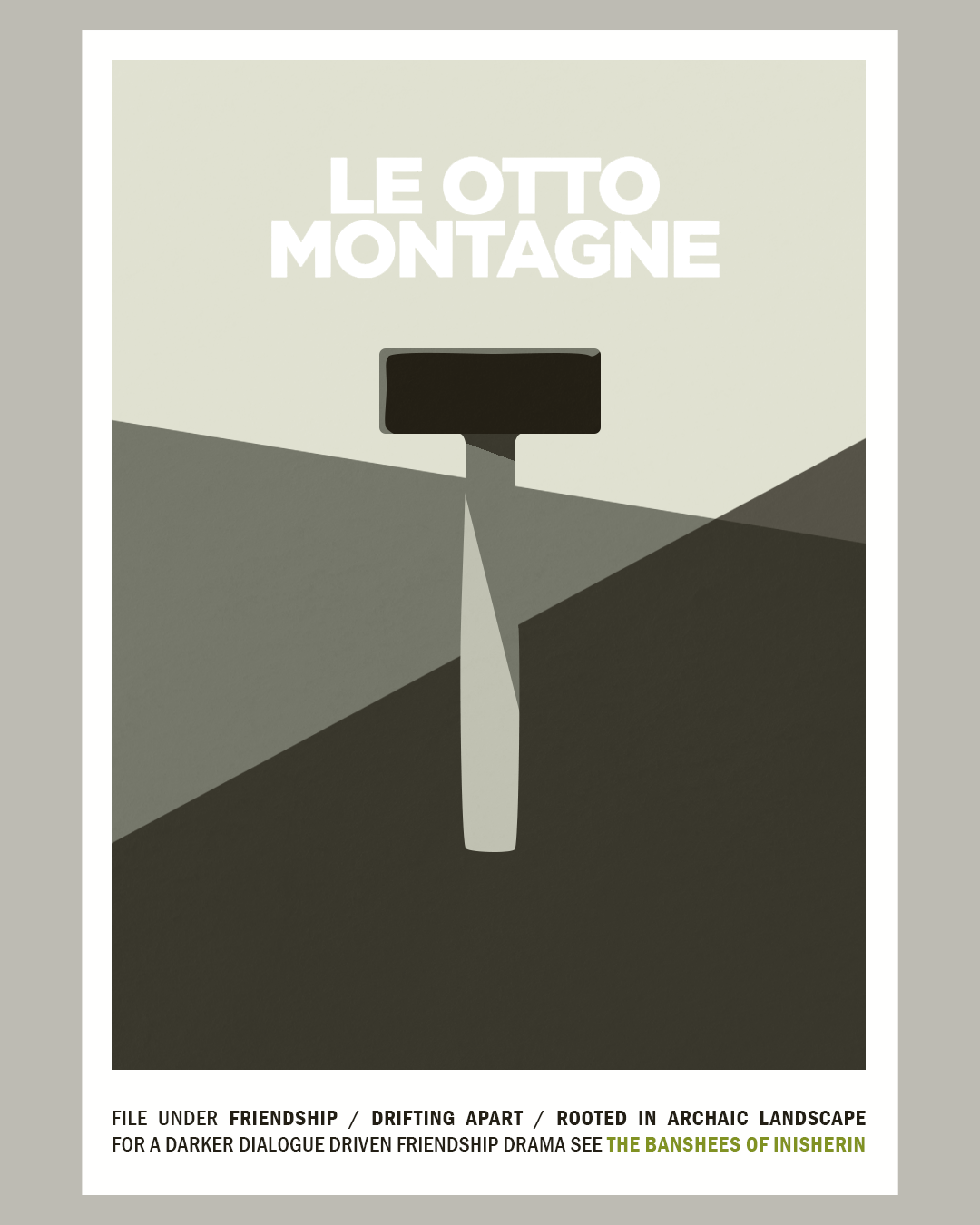
  • LE OTTO MONTAGNE (van Groeningen/Vandermeersch)
  • SPIDER-MAN: ACROSS THE SPIDER-VERSE (Dos Santos/Powers/Thompson)

Noteworthy Runners-Up: THE QUIET GIRL (Bairead), RETOUR À SEOUL (Chou), ALL THE BEAUTY AND THE BLOODSHED (Poitras), THE BANSHEES OF INISHERIN (McDonagh), HOW TO HAVE SEX (Manning Walker), SHEN HAI (Tian), SAINT OMER (Diop), MONSTER (Kore-eda)

I do not usually break down my film list into numbers, but Olivier Samter’s statistics inspired me to superficially dabble in that. So I find that exactly half of the films mentioned above have been directed by women (one of them co-directed with a man). Judging from the sheer amount of films I liked within the past twelve months, 2023 was a very good year. Looking at it as a cinephile in the literal sense that I prefer to see movies in a theater, it was less so. I had even prematurely claimed that it might have been my lowest cinema attendance in over a decade. But in reality, I had not thought of 2020 when canceled film festivals and closed cinemas resulted in only 49 theatrical experiences (an average of less than once a week). In comparison, I have watched about a third of the feature films I have seen in 2023 and a total of 76 screenings (including short film reels in festivals) in cinemas. Of all the streaming services, I have watched the most films on Mubi, followed by Apple (no subscription, pay per view), Disney+, Netflix, and the Swiss public-law platform playsuisse. 31% of all the feature films I watched were directed (or co-directed) by women (37.5% of the films seen in a cinema), whereas animation made up 23% (18.75% of the films seen in cinemas).

In a year when the painterly CG look definitely went mainstream, the most famous company celebrated its 100th anniversary desperately wishing for inspiration. But since that didn't happen, here is a mashup of the six animated features that I enjoyed* the most in 2023, drawn in the style of Milt Kahl (ca. 1973)
Animated Features

The share of animated features was probably higher than ever because I was part of the feature film selection at the Fantoche International Animation Festival (here is a list of all the features/mini-series/medium-length-specials I have watched last year). My favorites among the new releases – those that I either enjoyed the most or that stayed on my mind the longest, in no particular order – are the following:
LINDA VEUT DU POULET (Laudenbach/Malta)
TMNT: MUTANT MAYHEM (Rowe/Spears)
SUZUME (Shinkai)
SPIDER-MAN: ACROSS THE SPIDER-VERSE (Dos Santos/Powers/Thompson)
DEEP SEA / SHEN HAI (Tian)
THE BOY AND THE HERON / KIMITACHI WA DÔ IKIRU KA (Miyazaki)
Miyazaki’s (latest) swan song also prompted me to read “How do you live?” by Genzaburo Yoshino, a touching pre-WWII novel I wish I’d had when I was a teenager.

Special Mentions go to Pablo Berger’s ROBOT DREAMS (a gentle ode to friendship without dialogue), Jaebeom Park’s MOTHERLAND (the first Korean stop-motion feature in decades, unhurried, small-scale, tactile), KNIT’S ISLAND (a documentary by Barbier/Causse/L’Helgouac’h shot inside a virtual online community), and Marjolaine Perreten’s PEBBLE HILL (a charming tv special that never talks down to its target audience of young children).

Coinciding Restorations

I have also had the pleasure to seeing two brand-new restorations of Cinderella adaptations made in 1950, both of which adhere more or less closely to Perrault’s source material (not the Grimms’ version that is more popular in German speaking countries), embellishing the narrative in their unique ways. While the Disney restoration (4K, no less) pleasantly corrected some blunders of the previous digital releases by going back to the wonderful original colors and grain structure, the uncanny image stability and the lack of an original mono mix still make it look and sound a bit frankensteiny. It’s definitely the best thing next to an IB Tech print, though.

With the Catalan version ÉRASE UNA VEZ… (Escobar/Pellicer) the pleasure was more in seeing this rarity at all, especially after an insightful introduction by one of the researchers involved in a restoration process that took eight years because all they had to work with was a beat-up black and white 16mm print. Thanks to some surviving fragments, artworks, and photograms, they attempted to digitally reconstruct the cinefotocolor version that was shown at the Venice Film Festival.

Japanese Film History
During summer, I immersed myself in the works of Satoshi Kon all over again, re-evaluating his four features and the tv series PARANOIA AGENT for two lectures one of which was part of an extensive retrospective that also included film that inspired Kon and some that were most likely inspired by his films. A special focus on the mostly fictitious film history of MILLENNIUM ACTRESS gave me a reason to finally watch genuinely Japanese classics like TWENTY-FOUR EYES (Kinoshita, 1954) with Hideko Takamine and revisit some of my favorite Ozu films, among them LATE SPRING (1949) and LATE AUTUMN (1960) in which Setsuko Hara graduates from the unmarried daughter to the mother of an unmarried daughter within only eleven years. The relationship between parents and their grown-up children had been on my mind in real life a lot in 2023, so it was only natural that this theme also stood out to me in films as diverse as KING CREOLE (Curtiz, 1958) or TALK TO ME (Philippous, 2022).

Coincidental Selectrospectives
Apart from a deliberate retrospective of Wong Kar-Wai’s partly re-cut Criterion releases, I also happened to watch quite a big chunk of Sofia Coppola’s work in 2023, seeing SOMEWHERE (2010) and PRISCILLA (2023) for the first time. The latter turned out to be a total delight, confirming Coppola as the chronicler of isolation and loneliness in a golden cage: muted, told in a mostly non-verbal style with close attention to surface details, a star-turning lead performance, and the best Elvis impersonator I have seen in a long time (maybe ever?).

After being floored by ANATOMIE D’UNE CHUTE, I finally watched some of Justine Triet’s back catalog and was surprised how interconnected these partly messy, campy, or hilarious films feel regarding recurring themes and relationships. Lawyers or analysts who are personally involved with the people they represent or meet in court, flashbacks with asynchronous dialogue, piano pieces that are abrasively cut on the soundtrack, and in the midst of it all complex, imperfect, sometimes gloriously annoying female protagonists. The parts often seem to be tailor-made for actresses like Laetitia Dosch, Sandra Hüller, Laure Calamy, Virginie Efira, or Adèle Exarchopoulos whose intriguing presence I enjoyed in PASSAGES (Sachs, 2023), LES CINQ DIABLES (Mysius, 2022), RIEN À FOUTRE (Lecoustre/Marre, 2021), and SIBYL (Triet, 2019) last year.

Of all the older films I have seen for the first time in 2023, this dozen left a lasting impression for various reasons.

As far as retrospectives go, I also tried to catch up with some of the more well-known adaptations of Dickens’ “A Christmas Carol” I had never seen:
A CHRISTMAS CAROL (Marin, 1938): The ghosts of Sliding, Feasting, and Setting Things Done Swiftly.
SCROOGE (Neame, 1970): The Campy Ghosts of Shepperton, West End, and Modern Santa.
THE MUPPETS CHRISTMAS CAROL (Henson, 1992): The Ghosts of Jim Henson, the Creepy Kid, and the American Way.
As someone who cannot see any charm in the lifeless eyes of Muppets, the humbug levels in that last one outweighed the blessings by far. I still liked it better than Damien Chazelle’s BABYLON, a film that peaked pretty early: it was hard not to see that elephant crapping incessantly on the protagonist (and the camera) as a metaphor for what this three-hour concoction was doing to its audience (ok, me!).

Onscreen Singing
But cast members singing (in the rain or otherwise) also remained relatively popular beyond big budget love/hate letters to Hollywood or Mattel. From PEARL’s mom to the girls in EL AGUA to Tomas and Agathe in PASSAGES, the vulnerability and purity of singing a cappella created intimate connections, not unlike singing along at the top of one’s lungs in the safe environment of a car as in TALK TO ME and L’IMMENSITÀ or engaging in hilariously off-key karaoke in AFTERSUN and HOW TO HAVE SEX. In accordance with an overall “embodiment turn”, the trend of recent years to include voices (material and synthetic) into film scores (e.g. MANCHESTER BY THE SEA, THE FAREWELL) seems to here to stay with examples ranging from LA NUIT DU 12 and BEAU to GIRL GANG and ALL THE BEAUTY AND THE BLOODSHED.

Engaging with films hands-on
Speaking of embodied sounds, my video essay “Sensuous and Affective” was not only published by the Zeitschrift für Medienwissenschaft but also turned up in the Sight & Sound Video Essay Poll 2023, many thanks to Barbara Zecchi, Thomas Genevicius, Miklós Kiss, and Kevin B. Lee! 

Sensuous and Affective from Oswald Iten on Vimeo.

In connection with my work as a researcher I got to teach a seminar on video essays in which we engaged with Alice Rohrwacher’s LAZZARO FELICE (2018) in many different ways. It proved once again that establishing a personal relationship with a film, book or piece of music opens up one’s initial perspective on it in ways that often reveal new insight into the themes, structures or stylistics of films, books or media in general. Besides, my emotional engagement deepens with every viewing, at least before I get too used to it, like when I revisit a favorite work. 

Putting together a teaser for the 100 year anniversary of our local cinema, I had the opportunity to re-evaluate quite a few such films. The major discovery came with the restored theatrical international cut of Leone’s THE GOOD, THE BAD AND THE UGLY. I had never been completely convinced by the extended cut that had been the only way to see the film for a few years (after 35mm fell out of fashion). So when Kino Lorber finally released a 4K version of the original international cut, I found that, beyond the "re-inserted scenes" and the new sound mix, the extended cut added redundant shots of a few seconds here and there to classic scenes that worked far better in the theatrical cut.

In a similar way, making the fan art posters illustrating this post turned out to be a satisfying mode of engaging with the films that lingered in the back of my memory, especially as most of them have already been written about too often.

Looking forward
In terms of movies, 2024 looks promising. I have already been twice to the Marcello Mastroianni retrospective at the filmpodium where in February, I will introduce THE LONG DAY CLOSES (1992) in honor of the recently deceased Terence Davies, one of my favorite directors. Besides, there are still a lot of films that I have not seen yet either because I missed them in theaters or because they are still waiting for a release around here, among them KILLERS OF THE FLOWER MOON, POOR THINGS, EARTH MAMA, MAY DECEMBER, WAR PONY, GODLAND, ALL OF US STRANGERS, THE ETERNAL DAUGHTER, ORLANDO MY POLITICAL BIOGRAPHY, LOVE LIFE, AMANDA.




Wednesday, September 1, 2021

TV Dictionary - Heidi, Girl Of The Alps from Oswald Iten on Vimeo.

"Arupusu no shôjo Haiji" in one word. For the TV Dictionary Collection by Ariel Avissar: TV Dictionary
Definitions adapted from Merriam-Webster and Collins Dictionary.

For study purposes only.

All excerpts taken from Isao Takahata's 1974 TV series ARUPUSU NO SHÔJO HAIJI (HEIDI, GIRL OF THE ALPS). Subtitles adapted from SilverZeroSubs

Thursday, August 19, 2021

Two New Audiovisual Essays

"Berlin Alexanderplatz" in one word. For the TV Dictionary Collection by Ariel Avissar: TV Dictionary Collection

Switching channels between definitions in English (Merriam-Webster / Collins Dictionary) and German (Duden). 

For study purposes only. 

All excerpts taken from Rainer Werner Fassbinders 1980 TV series BERLIN ALEXANDERPLATZ (A FILM IN 13 PARTS AND AN EPILOGUE).


Colored Lighting in PARIAH from Oswald Iten on Vimeo.

"We weren't about notions of 'real time' so we became mainly concerned with levels of impressionism in our visual style. Basically, how far could we go with coloring characters and spaces before it started to become distracting and take away from the narrative?" Bradford Young on PARIAH
shadowandact.com/the-visual-aesthetic-of-pariah-an-interview-w-cinematographer-bradford-young

When it was released in 2011, Dee Rees’ debut feature PARIAH was ground-breaking and inspiring in many ways. Even ten years later, the thoroughness with which the inner journey of protagonist Alike is expressed via colored lighting remains quite unique. According to several interviews, the striking color concept of PARIAH was devised by Rees and Bradford Young. Heavily influenced by Haile Gerima and cinematographers like Arthur Jafa, Ernest Dickerson or Malik Hassan Sayeed, Young is not only one of the most interesting cinematographers of our time but also an important voice in the ongoing conversation about how to represent and photograph people of color on screen.

In this experimental visual analysis, I am exploring the "levels of impressionism" (Young) in the lighting of Alike’s face. Inevitably, it has also turned into a celebration of Adepero Oduye's remarkable performance in this very specific but universally relatable piece of cinema.

Breakdown:
00:00 Atmosphere
00:50 Chameleon: Painted by the Colors Around Her
01:24 From Darkness to Light
02:08 Contrasting Color vs Blending In
02:43 God Doesn't Make Mistakes
03:32 Butterfly: Life is Possible

Cinematography: Bradford Young
Gaffer: T.J. Alston
DI Colorist: Joe Gawler

While all the visual clips are from PARIAH (Blu-ray Focus Features Spotlight Series 2012), the music consists of excerpts from several compositions by Tamar-Kali who appeared in the film (representing the influence of Alike’s friend Bina) and went on to score the director’s later film MUDBOUND (2017).
- Pearl (Psychochamber Version) 2009
- MUDBOUND (Original Motion Picture Soundtrack) 2017

There are a couple of interviews with Young and Rees that go into more detail about their approach to color, e.g. the interview linked at the top or the following: interviewmagazine.com/film/dee-rees-pariah
If you are interested in more behind the scenes material, there is a great interview with the cast and crew online (Academy Museum, 2021): youtube.com/watch?v=1fhPrs_K0aU

Sunday, April 4, 2021

Silence in THE PASSIONATE FRIENDS

Silence in The Passionate Friends from Oswald Iten on Vimeo.

Audiovisual soundtrack analysis. [Spoiler alert: reveals important plot points and ending]

David Lean's 1949 melodrama THE PASSIONATE FRIENDS never gained the same popularity as its similarly themed predecessor BRIEF ENCOUNTER (1945). Had it not been restored and re-released in 2008*, it might have been all but forgotten by now. And yet, there is a lot to cherish and enjoy within these 90 minutes.

Despite its overall unevenness and unsatisfying ending**, THE PASSIONATE FRIENDS is probably my favourite among all of David Lean's films: the uncanny precision of an editor-turned-director at the top of his game, Guy Green's spectacular cinematography, a standout performance by Claude Rains (upstaging Lean's third wife Ann Todd), the recurring motifs of doors and wind (similar to GREAT EXPECTATIONS, 1946) and a lush soundtrack that is as complex as it is sensual.

And that is what this video essay is all about: silence as a powerful storytelling tool.

It was originally conceived as a companion piece to MELODRAMATIC RAILWAY SOUNDS (see below). But since I have eliminated most of the comparisons to BRIEF ENCOUNTER in the process, it definitely works as a standalone soundtrack analysis. In these essays, I always try to visualise sound objects in a way that is appropriate to the source material. This time, the challenge were sensual sound effects and silence itself.

Except for my voice, all sounds in this video come from the audio track of THE PASSIONATE FRIENDS (and in respective clips from BRIEF ENCOUNTER), no equalizers or filters applied. Please note, that in order to highlight certain parts of the soundtrack, I constantly adjust the volume of the clips. This might go without saying. However, while most viewers notice frame, size or brightness changes in an image, sound changes tend to be less obtrusive. So if you want to get a sense of the full dynamic, there is no way around going back to the original film – which I recommend anyway.

* A wonderful Blu-ray is available from Studio Canal in France (in English, of course).
** It is definitely worth reading up on the troubled adaptation and production process.

Since January 2021, I am proud to be part of www.videoessayresearch.org, a research project at the Lucerne University of Applied Sciences and Arts. 

Melodramatic Railway Sounds - Video Essay from Oswald Iten on Vimeo.

Sunday, January 24, 2021

[SAFE] and THE NEON DEMON in Dialogue

[UPDATE: the work-in-progress version of "Dialogue III: Carol / Jesse" below has been replaced by the completely reconfigured final version.]

Despite their obvious differences in story, theme and era, in my mind, Todd Haynes‘ [SAFE] and Nicolas Winding Refn’s THE NEON DEMON have somehow become tethered to each other. And I still do not know why, exactly.

Do the detox cult in [SAFE] and the predatory fashion scene in DEMON represent two sides of a coin? Is it the protagonists‘ failures to really connect, the many static moments of women sitting in or on a bed? Is it the slightly creepy L.A. setting, the emotional distance, the electronic score, the turquoise/pink bedroom design, the directors‘ predilections for frames within frames?

None of this is very extraordinary. Besides, if you compare two films, you always find both similarities and differences. So to explore those questions, I originally wanted to recreate the [SAFE] trailer with shots from THE NEON DEMON and vice versa. But I soon found that this was indeed too easy. So I decided only to include certain types of shots in order to suggest an alternative narrative based on the unaltered soundtrack of each original trailer. Additionally, I wanted to explore what an actual dialogue between the films‘ protagonists Carol and Jesse might reveal about their personalities and ultimately, how voices and speech patterns shape our impression of a character.


Dialogue I: [DANGEROUS] from Oswald Iten on Vimeo.

„But the basic, almost funny restriction that we placed on ourselves was this restrained coverage and distance from the character. The joke was, okay, let’s move in for a close-up but we never got very close. All of our proportions were appropriately adjusted from the starting point, which was wide. Minimal camera movement. “

Todd Haynes, 1995 in filmmakermagazine.com

Naturally in „Dialogue I“, I relied exclusively on camera movement, from following the characters unobtrusively to more formal and even autonomous motion.

Dialogue II: IT'S OUT THERE from Oswald Iten on Vimeo.

In „Dialogue II“, the focus is on shots devoid of human figures. Cinematography by Natasha Braier.

Dialogue III: CAROL / JESSE from Oswald Iten on Vimeo.

„Dialogue III“ invites the viewer/listener to explore not only the coincidental visual similarities (and the specific differences between them) but also to ask themselves whether they still perceive Carol (SAFE) and Jesse (DEMON) as specific characters when their interactions are reduced to generic situations and conversations. I’m especially interested to hear, how Carol and Jesse come across to viewers who haven’t seen the original films.


Monday, January 18, 2021

Beyond the Catchy Tunes: George Bruns and Craft of Transparent Underscoring

Video essay about George Bruns and the craft of transparent underscoring within Walt Disney's music department during the Wolfgang Reitherman era (Sleeping Beauty 1959, Goliath II 1960, One Hundred and One Dalmatians 1961, The Sword in the Stone 1963, The Jungle Book 1967, Aristocats 1970, Robin Hood 1973). Made as part of the audiovisual section of the NECSUS Autumn 2020 issue #Method, curated by Liz Green.  

More information about my intentions HERE.

Thursday, April 16, 2020

The Age Of Emptiness

My contribution to lockdown culture:


The Age Of Emptiness - Video Essay from Oswald Iten on Vimeo.

Video essay based on Martin Scorsese's 1993 adaptation of Edith Wharton's novel "The Age Of Innocence" and Bernard Herrmann's score for TAXI DRIVER (Scorsese, 1976).

"The Age Of Emptiness" takes a look at how we might also read Scorsese's film in our current situation of "Social Distancing". After all, the voice-over narration mentions people ("even young people") dying from pneumonia.

Loneliness has always been present in Scorsese's films, especially in TAXI DRIVER. But in THE AGE OF INNOCENCE, out of 130 minutes (excluding credits) there are 8 minutes of shots completely devoid of human characters. Especially during voice-over passages, these always remind me of INDIA SONG (Duras, 1975).

THE AGE OF INNOCENCE is exceptionally rich in visual motifs like hands, food, flowers (real, painted, embroidered...), cigars, fire, gloves, writing, paintings and lamps. So instead of another Scorsese-supercut, I attempted to tell a short story highlighting some of these motifs without showing a single human face (which meant I had to ditch the long shots of people sitting at a "social distance" of several feet from each other). No split screen, no explanatory voice-over, just images, music and text.

When Michael Ballhaus once visited our university and talked specifically about THE AGE OF INNOCENCE, he emphasized that his main concern (in general) had always been "capturing the subtext" by way of camera moves and that the excessive use of dissolves in this film had partly been the result of having to trim tracking shots that went on for too long. Thus, my video essay "The Age Of Emptiness" is also a tribute to Ballhaus' cinematography and the editing of Thelma Schoonmaker.

For study and educational purposes only.

Saturday, January 11, 2020

My Year in Film - 2019 Favorites


When the object of desire looks back and becomes a subject...
As I wrote before, this end of year post serves primarily to organize the glorious mess of cinematic impressions inside my head. The usual list of favorite films (those that impressed me the most) is followed by "general observations" which is basically a euphemism for cramming a whole year of cinematic cross reactions into one long monologue about songs, cinematography, nostalgia, horror and realism. Inevitably, certain films pop up in different contexts. [All images from films I studied in 2019. Click on them to fully see them].

Most Memorable Cinema Experience
My most memorable recent cinematic experience did neither take place inside a cinema nor did it include a screening in the narrower sense. It took place in Hawkins, Indiana in 1985… and since "friends" not only "don't lie" but also "don't tell", all I can say is: SecretCinema

Hardly less memorable was a screening of the 4K restoration of Spike Lee's masterpiece DO THE RIGHT THING (1989) in Locarno. This one did involve an actual screen (Europe's largest open-air screen). It also involved a deafening thunderstorm that forced me to read Italian subtitles and at one point it rained so hard that the light did not even reach the screen any more. That's what I call an immersive experience. And I love the film even more now. 

The best "regular" cinema experience was once again at the Annecy Festival where Jérémy Clapin's J'AI PERDU MON CORPS (2019) created a mass emotion - you could literally hear a thousand people breathe and gasp in unison.
 
For a lecture on THE FAVOURITE...
...I studied the films of Lanthimos.

Favorite New Releases
As usual, my list of favorite new releases (= released in Switzerland in 2019) is in alphabetical order. Italicized titles did not get a regular theatrical release around here. Two of the year's best films, IF BEALE STREET COULD TALK (Jenkins, 2018) and THE FAVOURITE (Lanthimos, 2018), are missing from this list because I have already written about them last year.
  • AMAZING GRACE (Elliott/Pollack, 2018): Filmed in a former cinema-turned-church, AMAZING GRACE must be experienced on the big screen. Regardless of the sterile lighting, the camera equipment in the frame and the grainy 16mm close-ups originally designed for TV, there is an unmatched immediacy to this rare concert film that shows the performers both as great artists and as sentient human beings in all their natural awkwardness. 
  • BURNING (Lee Chang-Dong, 2018): A melancholy literary adaptation that keeps all the main characters ambivalent for more than two hours and still allowed me to dive deeply into their emotional lives. I'm keeping things vague on purpose: the less you know about it, the better.
  • FIRST REFORMED (Schrader, 2017): Like a benevolent contemporary Taxi Driver, Ethan Hawkes' despairing priest moves through a rigidly framed small town setting the coldness of which is almost palpable. Personal, ascetical and haunting - Schrader at his best.
  • J'AI PERDU MON CORPS (I LOST MY BODY  Clapin, 2019): Using a mixture of computer generated and hand-drawn animation, Jérémy Clapin's debut feature is about a severed human in search of its body. Like pieces of a puzzle, effortlessly interspersed flashbacks provide unexpected emotional depth and gradually reveal the overall picture. The voice-acting is exceptional. I LOST MY BODY is the rare independent animated feature that I can recommend to film fans outside the animation bubble.
  • LAZZARO FELICE* (Rohrwacher, 2018): What starts out like a down-to-earth depiction of archaic life in the countryside (in grainy 16mm) turns out to be a playful meditation on time and period. Drawing from folk tales and biblical metaphors, Alice Rohrwacher delivers magical realism as well as biting social commentary.
  • MARRIAGE STORY (Baumbach, 2019): Had it stopped after the opening voice-over narration, I would have already loved it. But then, it precisely works out how a divorce procedure deepens a rift between two people who in fact still love each other. On top of that, Baumbach turns out to be a master of mood swings and observational comedy that often made me want to laugh and cry at the same time.
  • MONOS (Landes, 2019): A film like an erratic block. No explanations, hardly any psychological insight, only glimpses of humanity. The harsh landscape, atavistic behaviour, piercing music (Mica Levi), hypnotic pacing and sheer visual beauty pulled me into this self-contained universe that is on the verge of coming apart.
  • PARASITE (Bong, 2019): Two families, one above, one below, plus an unexpected third party. All of them parasites, and all of them likable and human in some way or another. Meticulously constructed, both terrifying and wickedly funny, Bong's genre-bending stunner has it all: set pieces, precise montages, a choral score, a ghost, fake blood, jokes about wifi and odors, and above all an uncanny sense of rhythm. It is also a masterclass in how to use architectural spaces.
  • PORTRAIT DE LA JEUNE FILLE EN FEU* (Sciamma, 2019): For her first period film Sciamma employs a simple flashback structure that conveys both the experience of falling in love and the memory of that love. In addition to her trademark non-verbal storytelling, here, Sciamma also relies on some of the sharpest dialogue this year discussing the history of female painters, reflecting on the Orpheus myth, as well as deconstructing the myth of the muse. All the while, the emotional tension is steadily growing. Don't miss this quiet, tightly composed and incredibly sensual masterpiece.
  • RAY & LIZ (Billingham, 2018): A time capsule if ever there was one. All texture, patterns and vignettes, this unflattering portrait of photographer Richard Billingham's parents could not be any further from the current nostalgic view of the 1980s. For a while, I even felt uncomfortable laughing at these peculiar characters. But Billingham opens the door just about enough for the audience to empathize with them.
  • ROLLING THUNDER REVUE (Scorsese, 2019): As a huge fan of Dylan's first Rolling Thunder Revue of 1975 I was delighted to see some of these filmed performances fully restored. But Scorsese's "conjuring" of this "Bob Dylan Story" turned out to be more of an essay film than a documentary. Playing along with (and visually commenting on) Dylan's re-invention as an American entertainer (and Poet Laureate) by way of conscious omissions, contradictions and fake interviews, Scorsese adds snippets of fictional, promotional and educational films into the mix. Overall, this "fever-dream" works better as a counterpart than an update to Dylan's own RENALDO & CLARA (1978).
  • SORRY WE MISSED YOU (Loach, 2019): Ken Loach's fierce indictment of the gig economy may lack the poetic quality of earlier films like KES (1969). Yet, the sustained emotional impact stems from a relentless suspense plot steeped in astute observations of social realities (including tender moments) and a cast of characters with ample potential for identification.
  • FOR SAMA* (Al-Kateab/Watts, 2019):Whatever I thought I knew about life in Aleppo during the decade's worst war did not prepare me for what Waad Al-Kateab's hand-held videos captured inside a Syrian hospital. Her documentary (put together with British filmmaker Edward Watts) is incredibly tense with close-ups of dead children. But with scenes of caring for a newborn baby or preparing family dinner, it is also a testament to resilience in the face of mass destruction.
  • SYSTEMSPRENGER* (Fingscheidt, 2019): Nora Fingscheidt's pink sledgehammer of a film allows us to identify with both a difficult but otherwise lovable child (whose point-of-view we mostly share) and her therapists/social workers who are increasingly at a loss with her. By the time Nina Simone's "I got life" kicked off the end credits, I was pretty sure that 9-year old Helena Zengel was in fact playing herself (because how can anyone that young fake such erratic behavior in an authentic way?), but it turned out she already had quite a few acting credits before.
First Impression
One film I definitely want to revisit once it is widely released in Switzerland is...
  • LITTLE WOMEN* (Gerwig, 2019): Ever dreamed of having your cake and eat it? Well, if that dream included Saoirse Ronan, Florence Pugh, Eliza Scanlen, Timothée Chalamet, Laura Dern, Chris Cooper and a truckload of costumes, you are in for a treat. Greta Gerwig's adaptation of the often filmed Alcott novel restructures the timeline in a way that provides ample Norman Rockwell Americana but also some more realistic insight into the life of women in the 19th century. Pure festive joy.
Looking at my list of favorite films above, there are productions from the US, the UK, France, South Korea, Italy, Syria, Colombia/Argentina and Germany (many of them co-produced with other countries), among them one animated feature, two concert films and a documentary. 5 out of 15 films were directed by women (marked by *). For common themes, subjects and styles see "General Observations" below.


Gazing.
Films that almost made the list include Jordan Peele's masterfully directed horror satire US (2019), Ari Aster's folk horror MIDSOMMAR (2019) and the Swedish misfit story GRÄNS/BORDER (Abbasi, 2018) that also dabbles in folk horror and is a sure contender for best makeup effects of the year. No less violent but more down-to-earth was HVITUR, HVITUR DAGUR/A WHITE, WHITE DAY (Palmason, 2019), the Icelandic equivalent of an arthouse Clint Eastwood film.

Quite recently, I also saw A VIDA INVISIVEL/THE INVISIBLE LIFE OF EURIDICE GUSMAO (Aïnouz, 2019), a Brazilian melodrama that takes its cues from Sirk, Fassbinder and the colorful vegetation around Rio, dwells on the involuntary separation of two sisters and eludes the male gaze.

Since I was too tired during the first half hour of Lulu Wang's THE FAREWELL* (2019) - it was the third or fourth film that day - I wasn't able to connect with it later on. I was struck, however, by Awkwafina's performance and the central questions. Oddly, Almodóvar's highly anticipated DOLOR Y GLORIA (2019) left me rather cold despite being wide awake. Still, it was intriguing enough to make me want to see it again (and hopefully enjoy it more).

The same goes for THE IRISHMAN (Scorsese, 2019) which I found interesting. My inability to engage with it emotionally was likely due to false expectations (I wanted CASINO 2, not SILENCE without God) and a screening that was marred by the audience - Scorsese probably never imagined that people pay to see a Netflix film in a cinema and then use their smartphones at the same time, not in a silent way.

When you find out that 48HRS is probably more honest than GREEN BOOK.
Favorite TV Shows I Saw in 2019:
  • CHERNOBYL (Renck/Mazin, 2019): Apart from being a devastating suspense drama, CHERNOBYL drew attention to an important but often unnoticed convention of fictionalized "true stories": the amalgam character, a character combing aspects of several "real-life" persons into one screen/literary character. This gives the writers the necessary dramatic leeway and clarity of relationships. The fact that a whole group of scientists were represented by the fictional nuclear physicist Ulana Khomyuk gave us a character we could root for, an emotional center and at least one woman in the series with any real power. Acknowledging this in the way the creators did hopefully makes more people aware of such dramatic conventions necessary in any adaptation, be it of a novel or a real-life event.
  • FLEABAG 2* (Waller-Bridge/Bradbeer, 2019): Phoebe Waller-Bridge, need I say more?
  • MINDHUNTER 2 (Penhall/Fincher/Franklin/Dominik, 2019): I preferred the second season to the first one because it left the "monster-of-the-week" path for a more consistent arc concerning the Atlanta Child Murders embracing unsatisfying conclusions and loose ends.
  • ONDES DE CHOC* (Baier/Bron/Meier/Mermoud, 2018): An anthology of four one-hour films made by four film directors from the French part of Switzerland, each one inspired by a shocking real-life news item. Overall, they made for a compelling watch and a showcase of the quality that is theoretically possible in Swiss public television.
  • SHARP OBJECTS* (Noxon/Vallée, 2018): Like all of director Jean-Marc Vallée's works, this adaptation of a Gillian Flynn thriller is chock full of carefully chosen pop songs. Besides, how often do you see a mystery that delays the real denouement until the middle of the end credits? It also put Eliza Scanlen on the map (at least on mine).
  • STRANGER THINGS 3* (Duffers, 2019): Less Spielberg, more Cold War atmosphere, but also funnier than expected. It is also notable, that a series about nostalgia made the inevitability of change a central theme (handling it much better than most of the films it is based on). The standout here was Hopper's speech (with a telling reprise of "Heroes") accompanied by rare moments of temporally free-flowing editing within a season that otherwise often compromised its own suspense by too much cliffhanger-cross-cutting.
  • TATAMI GALAXY (Yuasa, 2010): Yuasa Masaaki is one of the most beloved "unknown" anime director, kind of a maverick who works fast, mixing different styles and crazy, exaggerated animation. Taking place within the same universe as his 2017 feature THE NIGHT IS SHORT, WALK ON GIRL, this series about a shy student on a quest to win the heart of a girl makes him and us relive the same scenes in every episode like a teen freak version of GROUNDHOG DAY (Ramis, 1993).
  • THE END OF THE F***ING WORLD 2* (Covell/Ekaragha/Forbes, 2019): I did not want a second season. However, I loved it. Naomi Ackie as Bonnie is truly stunning, so much going on in that face even when she's deliberately being opaque.
  • UNBELIEVABLE* (Cholodenko/Dinner/Grant, 2019): On the one hand, this non-lurid, slowburn thriller explores what makes a vulnerable person lie against their own interests. On the other hand, we get a suspenseful police procedural told from the perspective of two female detectives whose buddy relationship transcends mentor-apprentice stereotypes. Heartbreaking but hardly sentimental, UNBELIEVABLE is uniformly well-acted.
  • WHEN THEY SEE US* (DuVernay, 2019): Although I knew beforehand that it is impossible to watch this without getting overly emotional, there was one moment that shook me to the core. When Antron (Caleel Harris / Jovan Adepo) who was sent to prison as a boy comes out a fully grown man - we have all seen similar scenes in recent years - it suddenly dawned on me what it really means (as opposed to what it means dramatically) for someone to lose those crucial years to life in prison. Like Barry Jenkins or Sean Baker, Ava DuVernay and cinematographer Bradford Young tell a devastating story with as much beauty as possible.
* shows or episodes created or directed by women.

Patterns galore: Ruth E. Carter's costume design for DOLEMITE IS MY NAME.

General Observations
Priceless Acting Moments that still make me chuckle:
  • THE END OF THE F***ING WORLD 2 (Forsman/Covell): Jessica Barden not managing to distort her face into a smile at her own wedding.
  • US: The look on Adelaide's face (Lupita Nyong'o) after her "glitch" and Zora (Shahadi Wright Joseph) at the wheel.
  • MARRIAGE STORY: Adam Driver cutting himself in front of the awkward "visitor" and Alan Alda digressing into an endless joke.
  • A VIDA INVISÍVEL: The conservative father dismissing his daughter's apology by way of a moronic grimace. It also makes your blood curdle right after laughing about it.
  • STRANGER THINGS 3 (Duffer Brothers): two words: "Neverending Story".
Whether in the sauna, the hospital or the underground lab: doors with rectangle windows.
I got stripes: Amy Parris' costume design for STRANGER THINGS 3.

The Power of Song
In terms of pop songs carrying a whole scene, Spike Lee killed it with Stevie Wonder's "I never thought you'd leave in summer" in the delirious colorful post-breakup-Wonder-Wheel scene in SHE'S GOTTA HAVE IT 2.2. Pop songs as source music were also crucial in two of my favorite scenes of Tarantino's ONCE UPON A TIME IN HOLLYWOOD: 1) the montage of Cliff (Pitt) driving home through LA at twilight. Not only did the music on the car stereo change with the cuts, but here nostalgia and (perceived) authenticity are also perfectly balanced. 2) When Cliff watches Manson arrive at what the latter believes to be Terry Melcher's residence, new owner Sharon Tate plays a Paul Revere record - produced by said Melcher.

In Martin Scorsese's ROLLING THUNDER REVUE, there is a wtf moment when Dylan and Joan Baez half-jokingly accuse each other of running off and marrying someone else (which is an uncredited outtake of an autobiographically inspired performance from RENALDO & CLARA, 1978). My favorite bit of that film, however, happens when the camera accidentally captures a happy young girl near the stage suddenly bursting into tears. That was more or less how I felt when Aretha Franklin started singing the opening lines of "You've got a friend" in AMAZING GRACE.

If you compare this homecoming concert (Aretha returned to the gospel of her youth) to Beyoncé's HOMECOMING* (2019), it becomes clear how much Aretha - despite her star status and commanding presence - still lived in a man's world in 1972. Rev. James Cleveland is a hilarious MC and Aretha's father is touching in his unscripted speech, but opposite these men, Aretha (the lady who taught the world "Respect") looks like a shy young woman who only opens her mouth to sing. Beyoncé, on the other hand, is mastermind, director and MC with a clear message. Nevertheless, both the free-flowing service from 1972 and the precisely choreographed Coachella shows from 2018 translate the live performance into an immersive cinematic experience (in the case of Beyoncé cleverly splicing the pink and the yellow night into one performance).

Some years ago, I started paying attention to scenes in which main characters sing in movies that are not musicals. Since musicians' biopics and run-of-the-mill jukebox musicals have become popular again, the frequency of singing scenes in "normal" films and TV shows seems to have reached the heights of the 1930s and 40s. Whether it is lip-synching like in PLAY (Marciano, 2019), karaoke (THE FAREWELL), singing in a car (GRÄNS, UNBELIEVABLE) or performing a song like Joaquin Phoenix in JOKER (Phillips, 2019) or Adam Driver in MARRIAGE STORY, singing characters were everywhere in the past twelve months. The MARRIAGE STORY example also belongs to a new subcategory: the Stephen Sondheim scene. Saoirse Ronan had one in LADY BIRD (Gerwig, 2017), so has Daniel Craig - in a car - in Rian Johnson's KNIVES OUT (2019, "I'm losing my mind" from "Follies"). Even the JOKER's first victims sing Sondheim in the subway ("Send in the Clowns"). 

Voices and choirs also featured in quite a few memorable scores for films like PORTRAIT DE LA JEUNE FILLE EN FEU (sort of a metadiegetic singing scene "fugere non possum"), PARASITE (music by Jung Jaeil), US (music by Michael Abels) or THE FAREWELL (music by Alex Weston). Weston and Abel are also some of the composers to watch in the future. So are Dan Levy (J'AI PERDU MON CORPS), Benedikt Schiefer (A VIDA INVISIVEL), Scott Bomar (DOLEMITE IS MY NAME) as well as Daniel Pemberton (MOTHERLESS BROOKLYN) and Nathan Johnson (KNIVES OUT) who both turned out to be more versatile than I thought.

contrasting unobtrusive/old fashioned earth colors and patterns with fresh red, white and blue in BLINDED BY THE LIGHT (Chadha, 2019).
The incredible cinematography of PORTRAIT DE LA JEUNE FILLE EN FEU.

Cinematography
In 2019, digital large format photography has become more commonplace than 3D. French cinematographer Claire Mathon, for example, used it for PORTRAIT DE LA JEUNE FILLE EN FEU because it allowed her to achieve painterly skin tones, bring out the costume colors and still work with relatively soft artificial lighting (that often feels like natural light). Films like JOKER (DoP Lawrence Sher) and MIDSOMMAR (DoP Pawel Pogorzelski) capitalized on the
spatial dynamic (withoutwide-angle distortion) large format cinematography offers. The latter often choreographing action on foreground, middleground and background layers at the same time. It is also one of the most impressively shot films of the year (did I mention, there's also a choir?).


Director of photography Hélène Louvart, on the other hand, filmed the flamboyantly saturated colors of A VIDA INVISIVEL on a handy Alexa Mini while using grainy Super 16mm for the more muted, naturalistic style of LAZZARO FELICE. Also, RAY & LIZ and the more lightweight MID90S (Hill, 2018) which I accidentally saw on the same day, were both shot on 16mm and in the more square Academy format (1:1.37). As is often the case, this random double feature (dictated by location and showtimes) revealed unexpected parallels between two very different films. Both are essentially time capsules built from vignettes that leave enough to the imagination to make the characters feel authentic. In both films a child stays out a whole night, someone steals from a family member and a child ends up almost dead.

As for time capsules captured on film, it is impossible not to mention Tarantino's ONCE UPON A TIME… IN HOLLYWOOD (2019) that employed 8, 16 and 35mm and 1.33, 1.85 and 2.39:1 aspect ratios for various layers of reality (home movies, tv shows, "movie movie" and "realer than real" Tarantinoverses). In my opinion, it is Robert Richardson's masterpiece as far as atmosphere and period feel go. That said, I'm still conflicted about the movie itself: I admire the directing, rhythm and overall aesthetics, I just do not agree with what I believe it is saying. But since I managed to keep clear of writing yet another dreary think piece about OUATIH so far, I will just focus on two aspects. 

Nostalgia [mild spoilers]
Over the course of little more than a year, probably due to the sad anniversary of the Tate murders, the "Manson" character has become a staple of stylized American period entertainment. The first and most impressive of these recent characters (a failed musician played by Linus Roache) clearly modelled on cult leader Charles Manson popped up in Panos Cosmatos' paralyzingly psychedelic MANDY (2018). Later that same year, Drew Goddard's Tarantino-imitation BAD TIMES AT THE EL ROYALE introduced a showy Chris Hemsworth in a similar role (also with a fictional name) accompanied by "Twelve Thirty (Young Girls Are Coming To The Canyon)".


That same Mamas & Papas song - that was reportedly playing when Tate's body was found - also announced the "young girls" and Tex (real names, this time) arriving at the Cielo Drive in ONCE UPON A TIME… IN HOLLYWOOD (surprisingly, both EL ROYALE and OUATIH also featured the Deep Purple cover of "Hush"). Damon Herriman as Manson only showed up shortly (see paragraph "Power of Song" above) but had the opportunity to fully explore the cult leader's weird charisma in a prison scene of MINDHUNTER 2.

First and foremost, OUATIH is a celebration of cinema and self-adulation - we often see people watching themselves on a screen; once, we even "enter" the ray of light of a projector that has the same god-like quality that Rudy Ray Moore (Eddie Murphy) attributes to it in DOLEMITE IS MY NAME (Brewer, 2019). But more specifically, OUATIH is about a transitional period of American pop culture with August 1969 stylized into a watershed moment. 

Add to that a playful patchwork narrative with layers of references (e.g. "the wrecking crew" alluding to a film, a group of musicians and the protagonists) told from the perspective of two privileged middle-aged men on the downgrade resisting any notion of change and you have a historical allegory that loudly asks "what does 1969 have in common with 2019?". This basic concept of period pieces is even literally invoked by the Sam Wanamaker (who really did direct the pilot episode of LANCER, but in 1968).

But OUATIH is so drenched in nostalgia for a Hollywood system that clearly had to perish - major studios churning out overlong all-star action remakes like THE GREAT ESCAPE (Sturges, 1963), conservative professional westerns and TV series past their golden days - that it gets stuck in hippie bashing (with hippies likened to brain-washed murderers) and denouncing woke culture in a way that felt more like dog-whistling than satire (needless to say it did not embrace change in the way that other nostalgic summer escapist fantasy ST3 did). It all made sense from the point of view of Rick and Cliff. But their saving the day (also very much in character and hilariously funny) is the kind of wish fulfillment that goes against everything Tarantino conveyed in his revenge fantasies up to DJANGO UNCHAINED (2012).

It made sense to root for outlaws like Django, the Bride in KILL BILL (2004), the women in DEATH PROOF (2007), or the jews in INGLOURIOUS BASTERDS (2009) because they all were self-empowered underdogs. Those films were all about ending oppression by established authorities, not stopping change from happening. But seeing middle-aged celebrity has-beens as underdogs is too much of a stretch. And where is the self-empowerment in that? Why weren't Bruce Lee and/or Tate herself saving the day? But hey, that is just, like, my opinion, Dude... and maybe it is not a bad thing that Tarantino finally managed to provoke me. 

Popular in 2019: fun fairs and ferris wheels (SHE'S GOTTA HAVE IT 2).
"I never dreamed you'd leave in summer"
Horror
Usually, the deaths that occur in pre-credits scenes of horror movies are of no real emotional consequence to the audience (just yet). In MIDSOMMAR, however, Ari Aster uses a tense prologue to charge his folk horror vision with emotions triggered by an unbearable family tragedy, less disturbing than the one in the first half of HEREDITARY (2018) maybe, but with the same lingering impact. It was certainly the first time that I was able to immerse myself deeply into a folk horror experience. Once again, Aster plays with genre conventions occasionally inverting them for comic effect.


This is also true for PARASITE and US (2019) which echoed each other in quite a few aspects (characters "tethered" to each other, contrasting families, living below street level etc) and could both be categorized as prestige horror films with satirical elements taking on social injustice. Jordan Peele's American doppelgänger apocalypse also featured an escapist location that was wildly popular in 2019: IT CHAPTER TWO (prologue), SHE'S GOTTA HAVE IT 2 (Coney Island), TOY STORY 4 (Hitchcock reference and farewell) and STRANGER THINGS 3 ("the trees are moving!" among other Shakespeare references) all had a fun fair with a creepy house of mirrors and/or a ferris wheel (in JOKER, the one from "The Killing Joke" is seen in the background) rendered in the most delicious digital candy colors.

While a creepy fair ground was a sure bet in IT 2 (Muschietti, 2019), I certainly did not expect Xavier Dolan to show up in it. Unlike in MIDSOMMAR, the impact of this violent opening scene did not last as long as it probably should have. What followed felt more like a series of standalone episodes (or levels of a computer game) before they all gathered for the tedious and ridiculous finale. However, with the second half of IT coming out only two months after ST3, it finally became clear how much the Duffer brothers - who originally created their Netflix phenomenon after not being able to direct the IT remake - reshuffled and paraphrased elements from Stephen King's tale and made it work much better on (the small) screen. Just think of the final voice over speech/letter. 

On a side note, thanks to ST3 taking a few turns I was initially reluctant to follow (evil Russians, fat Rambo), I caught up with some previously shunned 1980s movies, among them RED DAWN (Milius, 1984: seriously?), HEATHERS (Lehmann, 1988: quite fun and memorable), and EVIL DEAD II (Raimi, 1987: love it!).

WIP from an unfinished video essay about...

...the color yellow in PARIS, TEXAS (Wenders, 1984)


Realism and Subjective Perception
These days, I often think of Fassbinder's dictum "when I go to the cinema, I want an experience" (I'm paraphrasing). Judging from his own movies, I think what he had in mind was less 1917 (Mendes, 2019) than, say, JOY* (Mortezai, 2018), SHÉHÉRAZADE (Marlin, 2018) or DIVINES* (Benyamina, 2016) - all of which I liked because they each let me in on a young person's specific experience heretofore unknown to me. Besides, each one is told in a somewhat distinct style. To be clear, I'm not talking about masterpieces here. However, I still find it sad that all three movies went more or less directly to Netflix, even though there are 400-500 films p.a. released in cinemas around here.


As regards contemporary issues, two Swiss films provided insight into local islamic communities. While AL SHAFAQ* (Isik, 2019), a feature film about a teenager from Zürich who joined the war in Syria, was convincing in its unagitated, thoughtful attitude towards a difficult subject, overall it felt too uneven to me. Anyhow, Kida Khodr Ramadan as the teen's father left a deep impression with a very restraint performance. But if I wanted to challenge prevalent stereotypes, I would probably recommend NAÏMA* (Milosevic, 2019), a compelling hour-long documentary about a middle-aged Muslim woman who manages a project to combat religious extremism in a small Swiss town.

Sketching a different social environment, writer-director Hans Kaufmann and actor Joel Basman managed to make DER BÜEZER (THE WORKING MAN, 2019) outside of the usual funding channels of Swiss film productions. Deeply rooted in its Zürich milieu, this impressively photographed (DoP Pascal Walder) minimalist character study of a lone plumber is well-acted, atmospheric and so lean it leaves room for imagination (near the end, it felt rushed, although this was no issue with younger viewers). It is also easy to see DER BÜEZER as a paraphrase of Scorsese's TAXI DRIVER (1976), especially since it raises similar questions about our society (although the protagonist is by no means a reactionary like Travis Bickle).


Thankfully, it came out before JOKER which was much more openly based on the sociocritical New York movies of the late 1970s, predominantly the Scorsese-De Niro collaborations. Although I enjoyed watching it twice, I found it not only confused about what it wanted to say but also too unsubtle to be taken seriously. Moreover, in comparison to many of the films it references, if often feels shallow. On the upside, TAXI DRIVER is now definitely one of my all-time favorite films.


However, JOKER is a great conversation starter on many a pressing issue of our times. Besides, I loved the production design, the references to fictional and real clowns and most of all the allusions to Frank Sinatra (a self-stylized sad clown on "Only the lonely") who played a cynical stand-up comedian in THE JOKER IS WILD (1957), reportedly wanted to play the Joker on TV and even painted sad clowns in oil. So it is only fitting that the song that connects Arthur Fleck with De Niro's TV host is Sinatra's defiant version of "That's Life".


THE IRISHMAN provided me with an excuse to revisit some more Scorsese-DeNiro movies. GOODFELLAS (1990) and CASINO (1995) made me realize two things: a) how Scorsese structures his films by turning excitement on and off like a car radio and every so often shocking us with complete silence; and b) how crucial the relationships involving Lorraine Bracco and Sharon Stone, respectively, are to the disturbing, explosive impact these films still have on me.

This is especially interesting in the light of the more restraint IRISHMAN where female characters do not really figure in Frank's subjective version of the story. Nevertheless, Scorsese shows us women that feel real enough to have an (off-screen) life of their own (Frank simply does not listen to them) and relationships that are gradually destroyed by the kind of toxic masculinity of "professionals" that Tarantino unabashedly celebrates with his fairytale happy ending of ONCE UPON A TIME IN HOLLYWOOD. 

Epilogue
In 2020, I have already seen Melina Matsoukas' QUEEN & SLIM* (2019) and Ladj Ly's LES MISÉRABLES (2019), two memorable feature length debuts depicting police brutality in very different settings. Both also feature a strong-willed boy who has never knew anything else. And both films turn out to be much more complex than they seem in the beginning. Both have to be seen on a large screen (Tat Radcliffe's cinematography brings to mind that worn out phrase "every frame a painting") and each one slows down in the second half to give the characters - and the audience - some space to breathe and think before the final powerful blow. One ends in suspension, the other one with an elegiac epilogue, though.

[Note: sorry for the terrible layout. This design template is wearing me out... need to change that soon]